
The tools we needed didn't exist. So we built them.
Three systems that power every site we manage — designed, developed, and operated by the same people who pull the permits and answer the phone.
Manufacturer software stops where our job starts.
Manufacturer software monitors individual controllers. That is fine for a single property. But when you are managing compliance across multiple Water Management Districts, tracking permit allocations in real time, coordinating crews across dozens of sites, and building audit trails regulators actually accept, it stops being enough.
We looked for platforms that could do it. They didn't exist. So we built them — not as side projects, but as the core infrastructure the entire operation runs on, every day.
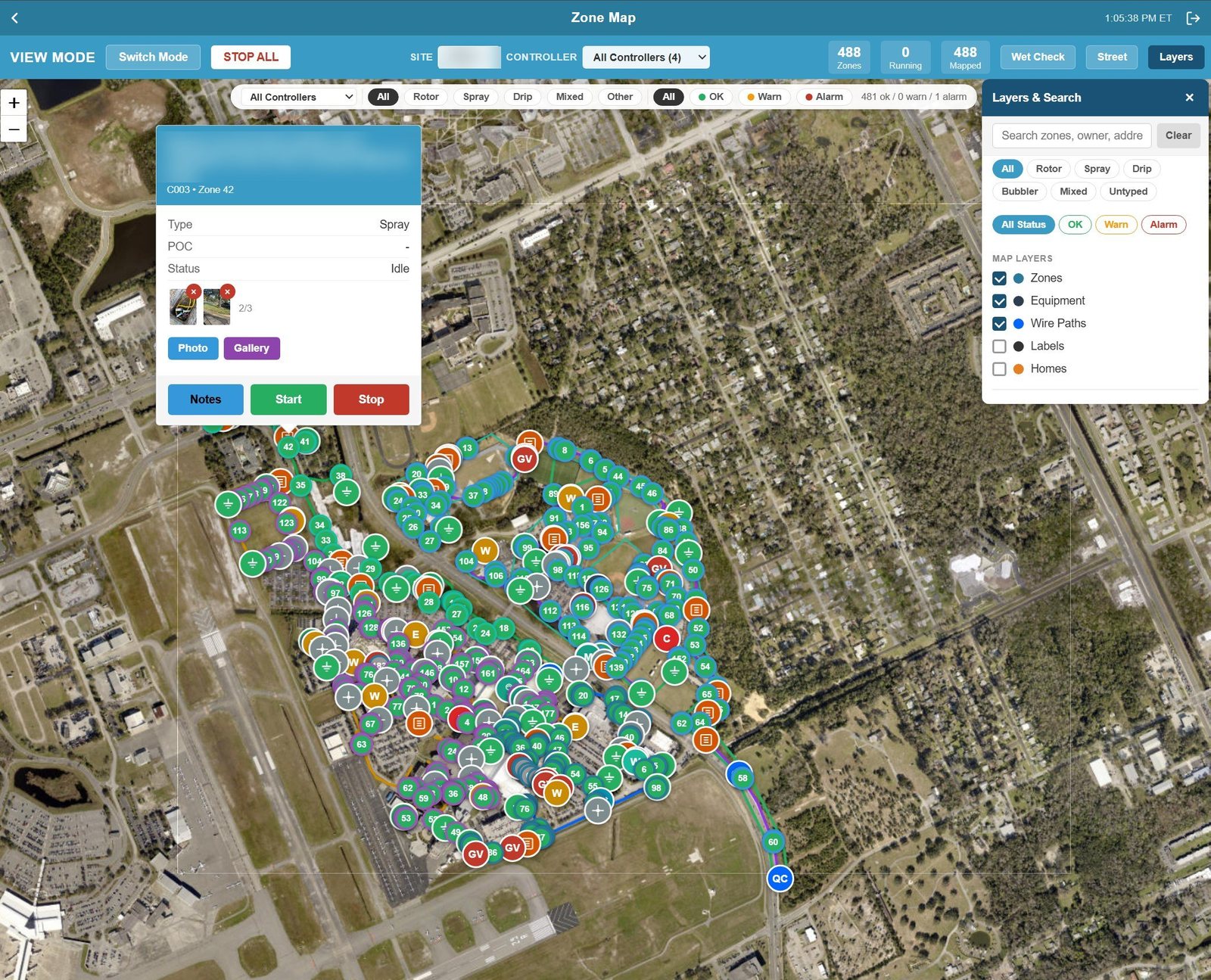
Every brand under one monitoring layer.
Hunter, Rain Bird, Maxicom, Baseline, Tucor, Toro — unified on one layer that controls and verifies thousands of zones every day. We don't see what one manufacturer wants us to see. We see everything, across every brand, across every site, as it happens.
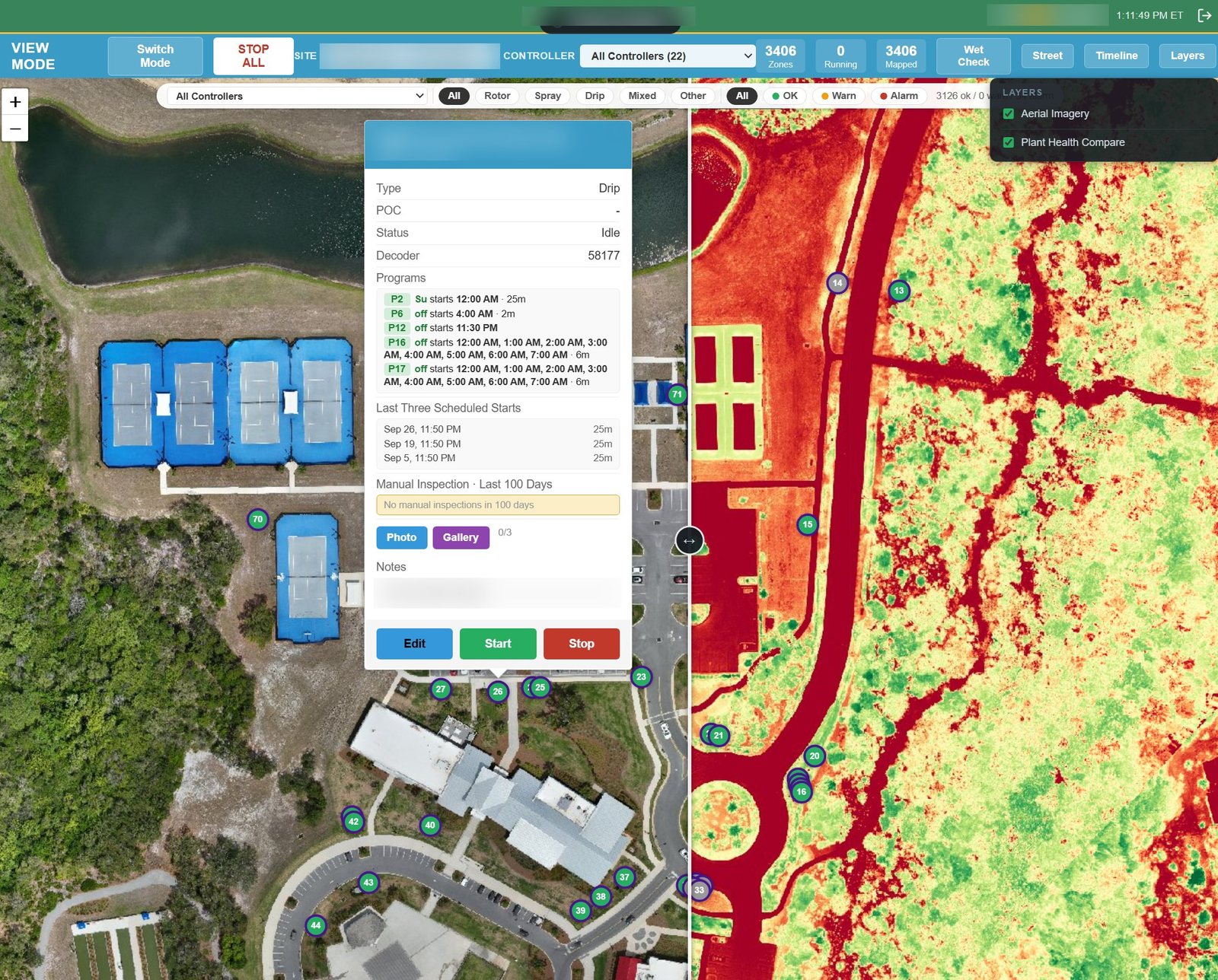
- Zone-level command and monitoring across all sites
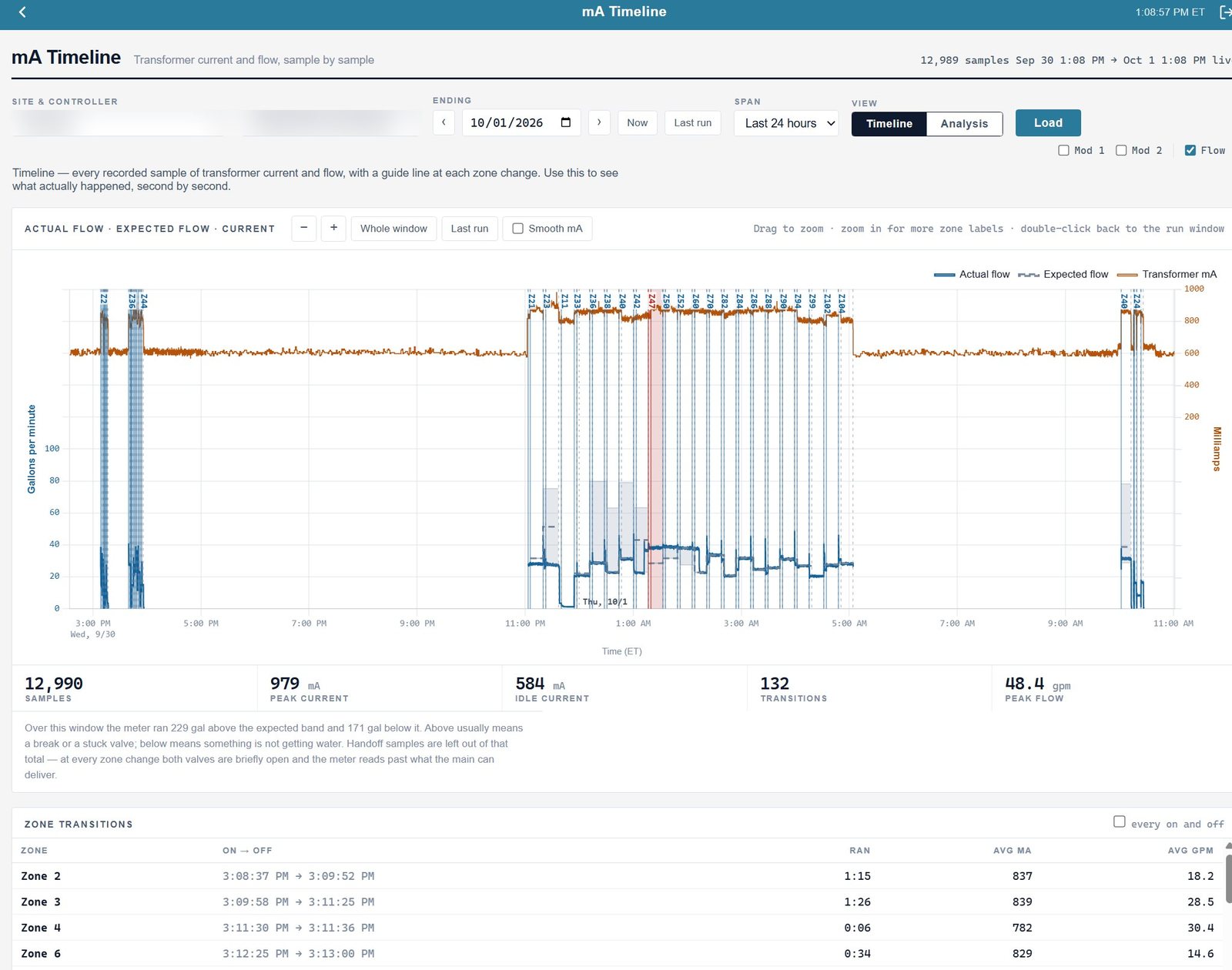
- Flow sensor integration with automated leak and break detection
- Fault alerts raised before the turf shows damage
- Weather-integrated scheduling that adjusts on its own
- Multi-site coordination from a single interface
A mainline break at 2 a.m. raises an alert before the first gallon is wasted. A flow sensor reads abnormally at one site while a drought order restricts another — both are handled before sunrise.
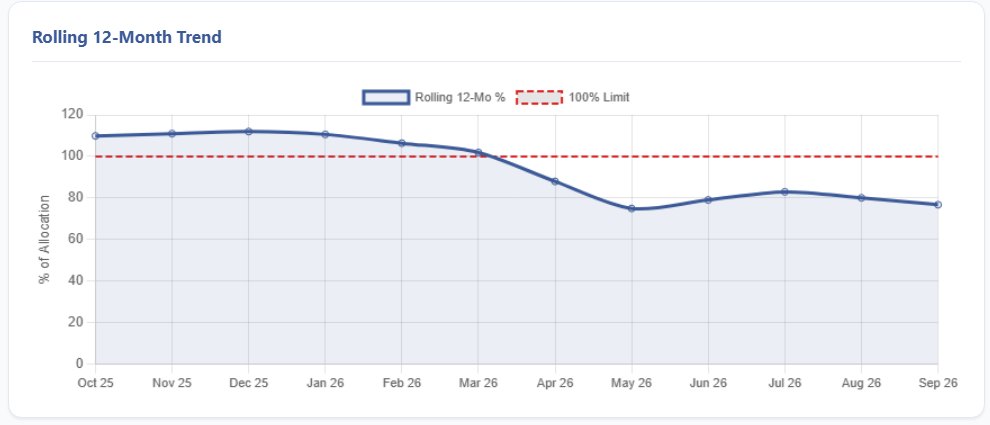
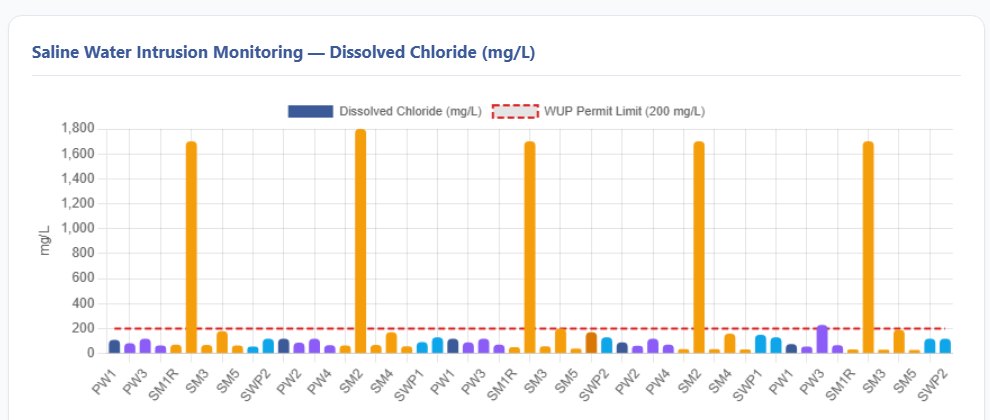
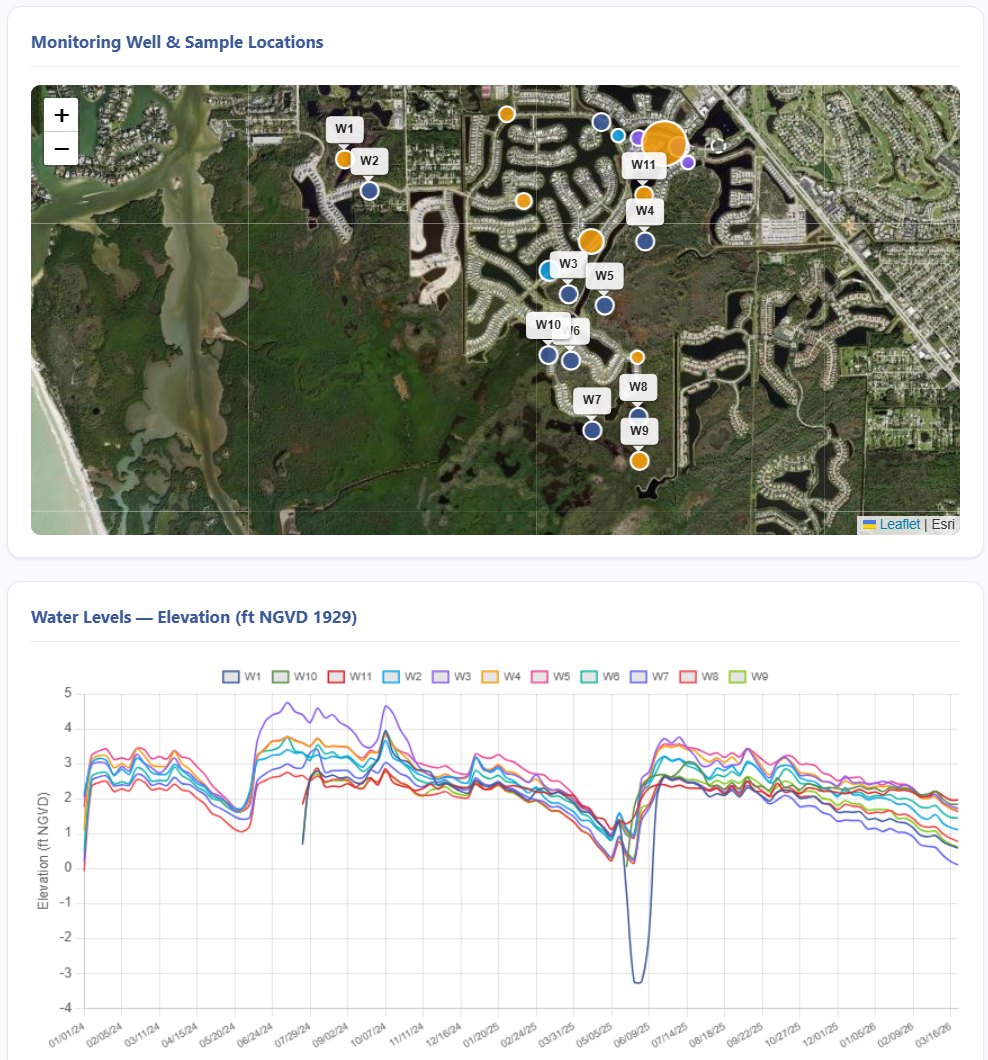
Compliance tracked against the allocation, continuously.
Water Use Permits are not suggestions. Exceed your allocation and you face fines, consent orders, and a public record. Most properties find out when the district's letter arrives. Our clients know months ahead. Why communities run over
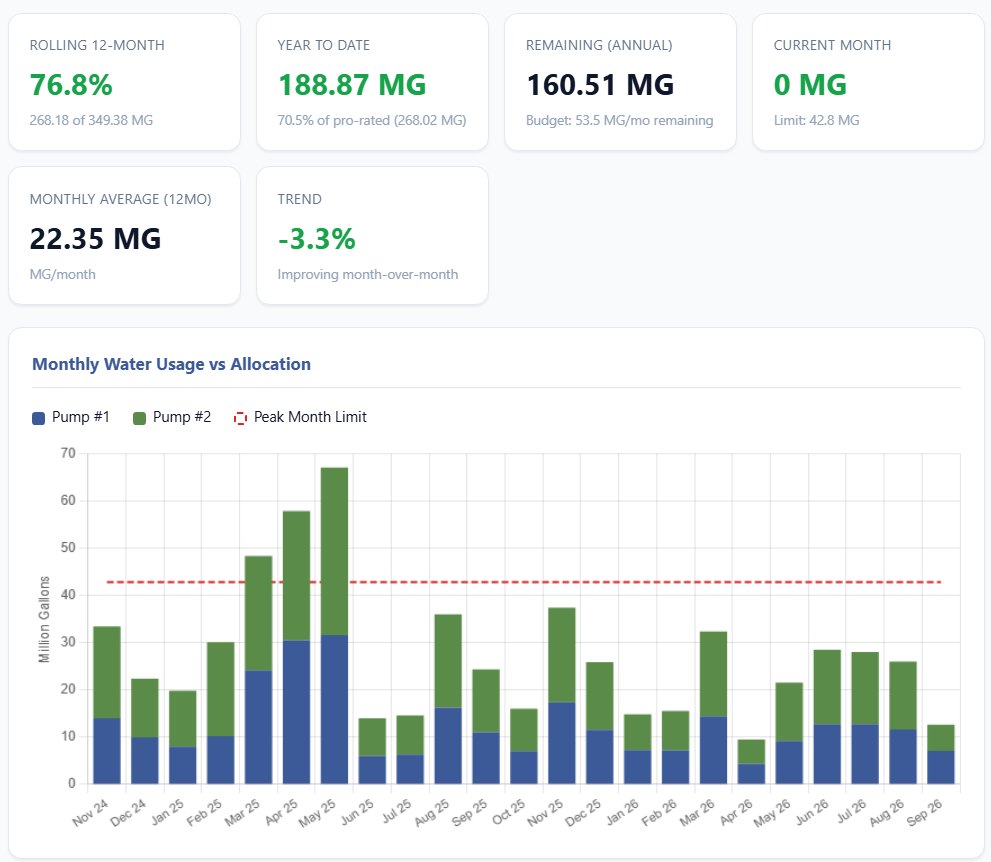
- Rolling 12-month usage measured against permit allocations
- Threshold alerts at 80, 90, and 100 percent of annual and peak-month limits
- Drought order evaluation — which restrictions apply to which aquifer
- Compliance tasks generated automatically from permit conditions
- Monthly, quarterly and annual permit reporting, filed on each permit's calendar
Before the district finds the problem, we already know. Before the fine arrives, the corrective action is filed. Compliance stops being a checkbox and becomes a process that runs whether anyone is watching or not.
Compliance is decided at the home. So we meter every home.
Monitoring controllers is the easy part. In a Florida community most of the water runs through lots the association does not control: homeowner controllers, often set by owners who do not live there — investors, rental companies, owners out of state or out of the country — and nearly every owner believes the lawn needs more water, not less. A pump meter tells the board how much the community used. It cannot say where the water went, or who needs help getting it right.
- Read every day
- 700+Homes on our meters, every meter read daily.
- Under contract
- 2,300+Homes across Florida communities.
- Identified for follow-up
- 1 in 5Homes flagged for outreach where watering schedules are in force.
- Above budget
- 44%Of homes with a water budget used more than it in the last 30 days — the gap education closes.
Insight metering data, October 2026
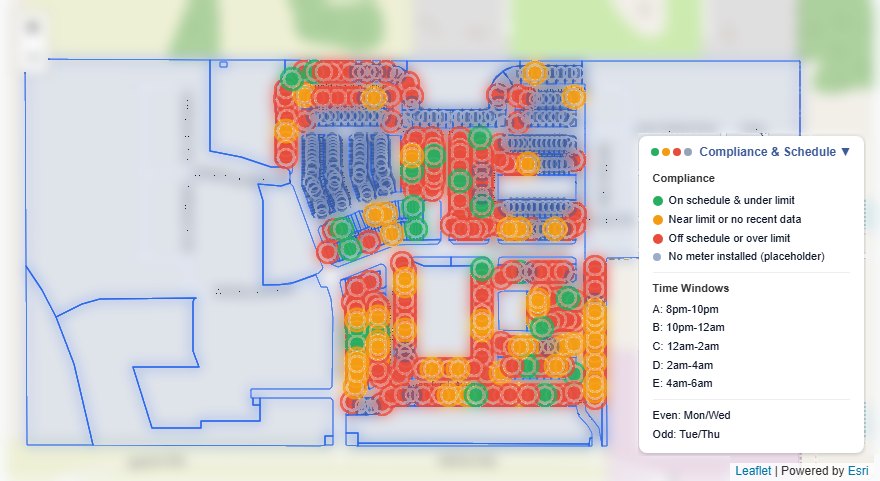
- A meter on every home, read every day
- Each home checked against its watering days, its watering window and its water budget
- Homes off their schedule, and leaks, identified from the data — not from a complaint
- Our technicians follow up at the homes we identify: controller settings corrected, owners shown what their lawn actually needs
- Every installation tracked lot by lot with GPS coordinates and test records, so the handoff from developer to HOA is complete
Track, identify, educate. The board and the manager see where the water is going, owners learn what their lawn actually needs, settings get corrected, and the community stays inside its allocation — before the district's letter, not after.
An intelligence layer on top of all of it.
We are building systems that sit on top of the platform data: predictive maintenance, automated regulatory interpretation, and plain-language answers to compliance questions. Same rule as before — if the tool doesn't exist, we build it.
See what this can do for your operation.
Whether you are breaking ground, managing permit compliance for a community, or running a multi-zone facility, the conversation starts with your specifics.
Talk to us